



Most museums make it very clear when the visit begins. There is an entrance, a ticket desk, and a moment when the outside world is left behind. Jeddah’s Open Air Museum has never worked that way.
Its sculptures became part of the city long before many residents knew who created them. They appeared beside roads, on roundabouts, and along the waterfront, turning up during school runs, evening drives, and ordinary journeys across Jeddah. Some became landmarks. Others were passed so often that people stopped noticing how unusual they were.
That familiarity hides a remarkable story. Jeddah became home to works by some of the most important sculptors of the 20th century, including Henry Moore, Joan Miró, Alexander Calder, Jean Arp, and Victor Vasarely. Their pieces stood alongside work by Saudi and Arab artists, creating a public collection that would not have looked out of place inside a major international museum.
Instead, it was placed in the middle of daily life. A major conservation project later restored 26 important works and brought them together at the Jeddah Sculpture Museum on the Corniche.
More recently, 14 international sculptures have been installed around Al-Arbaeen Lake near Historic Jeddah, giving the city’s public-art story another setting. Together, these spaces tell the story of a city that decided art should not be hidden behind gallery doors.
How Jeddah Became a City of Sculptures
The story begins during the 1970s, when Jeddah was growing at extraordinary speed. New roads, neighbourhoods and public buildings were appearing across the city. Mohammed Said Farsi, who became mayor in 1972, believed that this rapid development needed more than practical infrastructure. He wanted art to become part of the environment people moved through every day.
Under his leadership, sculptures began appearing across Jeddah. Some were commissioned from internationally recognised artists, while others were created by artists from Saudi Arabia and the wider Arab world.
The ambition was enormous. In a little over a decade, more than 400 sculptures were installed across the city and its Corniche. They ranged from monumental abstract works to pieces inspired by calligraphy, Islamic geometry, boats, bicycles, traditional objects and the sea.
For residents, they gradually became part of Jeddah’s visual language. People did not always know the title of a work or the name of the artist behind it. They knew the sculpture near a familiar junction, the one passed on the way home or the shape that appeared just before a turning. Public art became part of navigating the city as well as experiencing it.
Farsi was not simply filling empty spaces. He was creating a collection that people encountered without needing to plan a cultural outing first.
Art Without an Entrance
Placing sculpture outdoors changes the way people respond to it. Inside a traditional museum, the experience is carefully controlled. Visitors follow a route, read labels and stand at a respectful distance. Outdoors, everything becomes less formal.
A sculpture may first appear through a car window. It may be surrounded by walkers, cyclists and children rather than quiet museum visitors. Someone may stop to study it, while another person uses it as the point where an evening walk turns back.
Jeddah’s light and coastal setting also change the work. Metal surfaces become sharper in strong sunshine, while shadows stretch across the ground later in the day. Sea haze can soften a sculpture that looked severe on a clearer morning.
The same piece may feel completely different depending on the weather, time and direction from which it is approached. That freedom suits artists such as Joan Miró, who believed sculpture belonged outdoors, where it could exist alongside movement and ordinary life.
Why the Sculptures Needed to Be Restored
The waterfront gave Jeddah’s sculptures an unforgettable setting, but it was not a gentle one. For decades, the works were exposed to strong sunlight, humidity, wind, sand and salt carried from the Red Sea. Metal corroded, paint faded and surfaces changed. Some pieces were also affected by roadworks, redevelopment and changes to the spaces around them.
By the early 2010s, conservation had become essential. Art Jameel and Jeddah Municipality began working together on a major restoration project, bringing in specialist conservators to examine the condition of the collection.
This involved much more than cleaning the sculptures. Different metals, finishes and construction methods required different treatments. Corrosion had to be stabilised, missing elements repaired and original colours studied carefully. Several works were also monumental in both weight and scale, so moving them required cranes, specialist transport and detailed planning.
In 2013, 26 restored modern and contemporary sculptures were brought together at the Jeddah Sculpture Museum on the Corniche. The new setting preserved the original idea behind the collection: the works remained outdoors, free to visit and connected to public life.
The Artists Behind the Collection
The size of the collection is impressive, but the names represented within it reveal why it matters internationally. These were not generic pieces ordered to decorate landscaped spaces. Many were created by artists whose work appears in some of the world’s most important museums and public collections.
Henry Moore
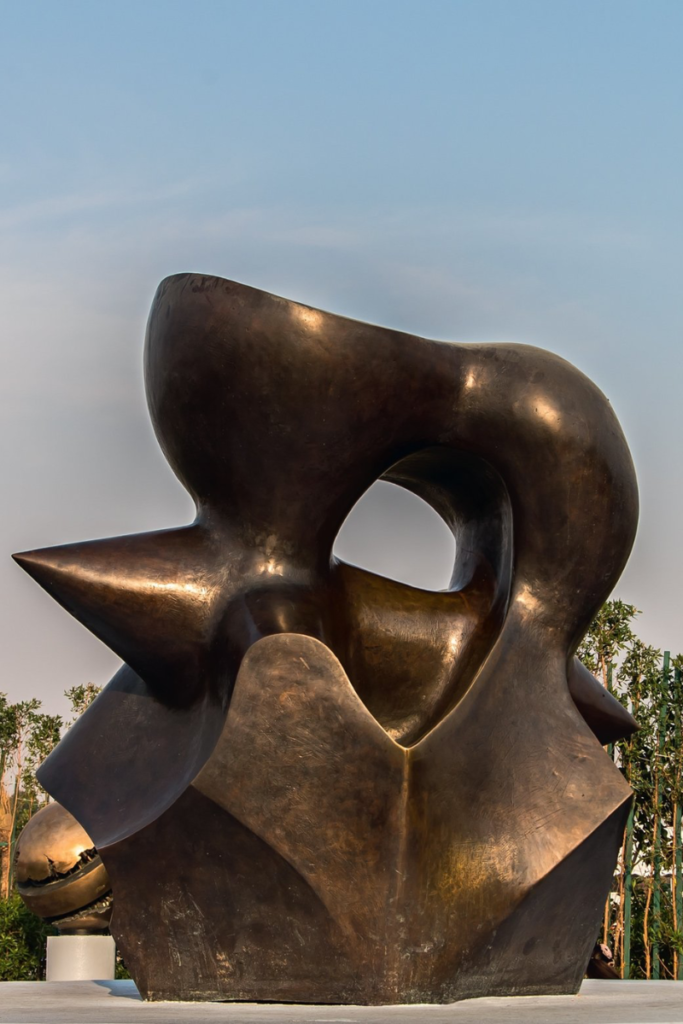
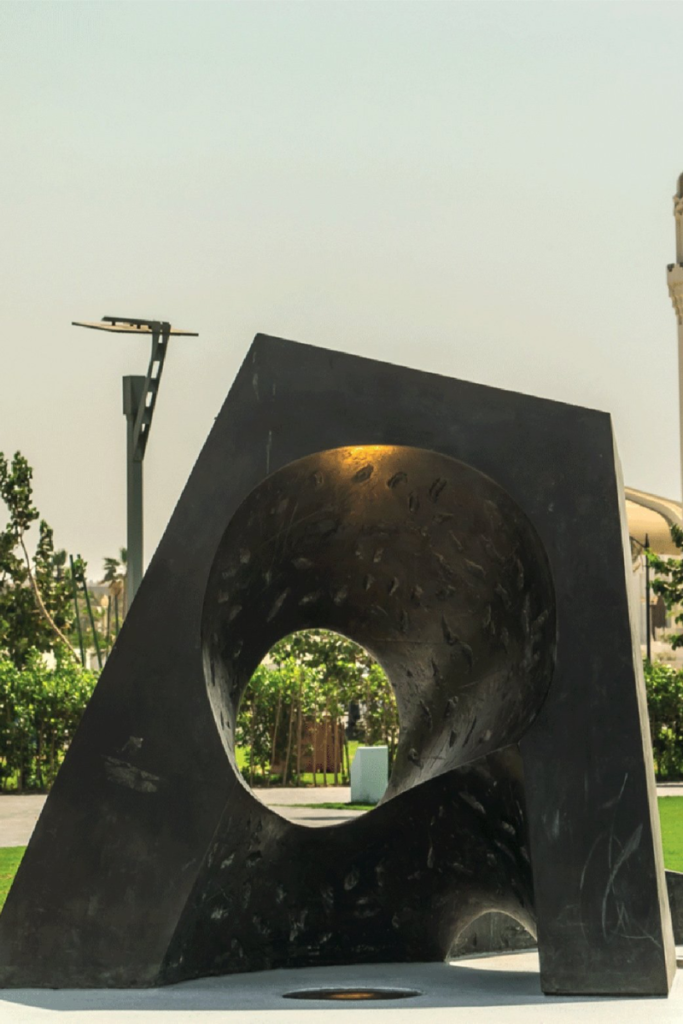
Henry Moore was one of the most influential British sculptors of the 20th century. He became known for large works built around curved shapes, openings and forms that suggest the human body without copying it directly. His sculptures often appear heavy and grounded, yet the spaces running through them can be just as important as the material itself.
Moore created work to be seen from more than one position. A piece may look solid from the front and unexpectedly open from the side. That approach makes his sculpture particularly suited to an outdoor setting. The viewer is not told where to stand, and the surrounding sky becomes part of the work.
Joan Miró
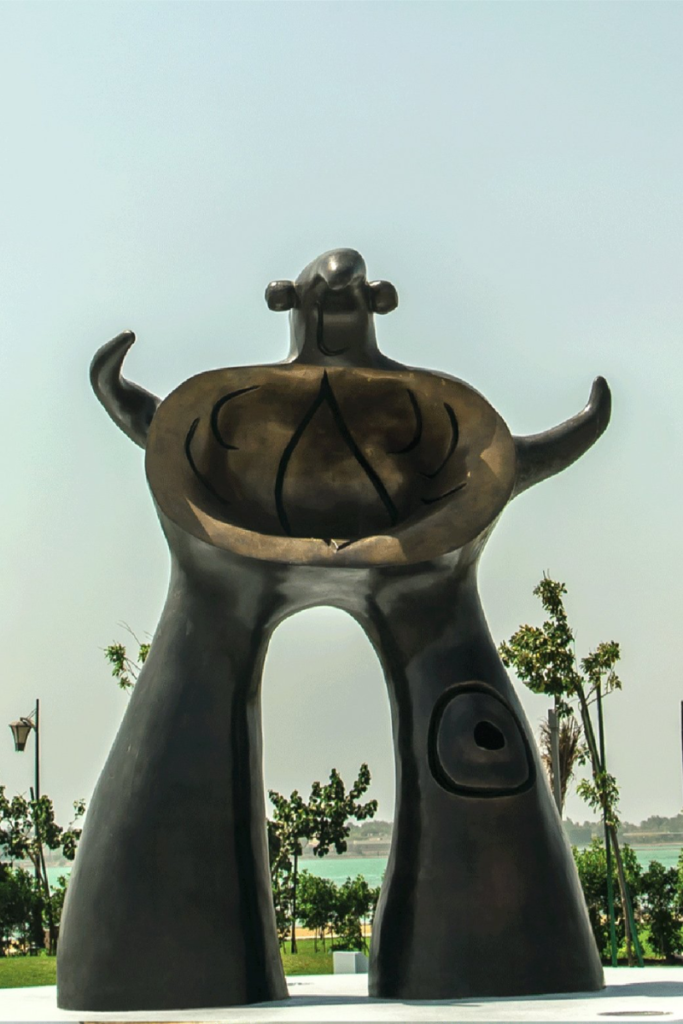
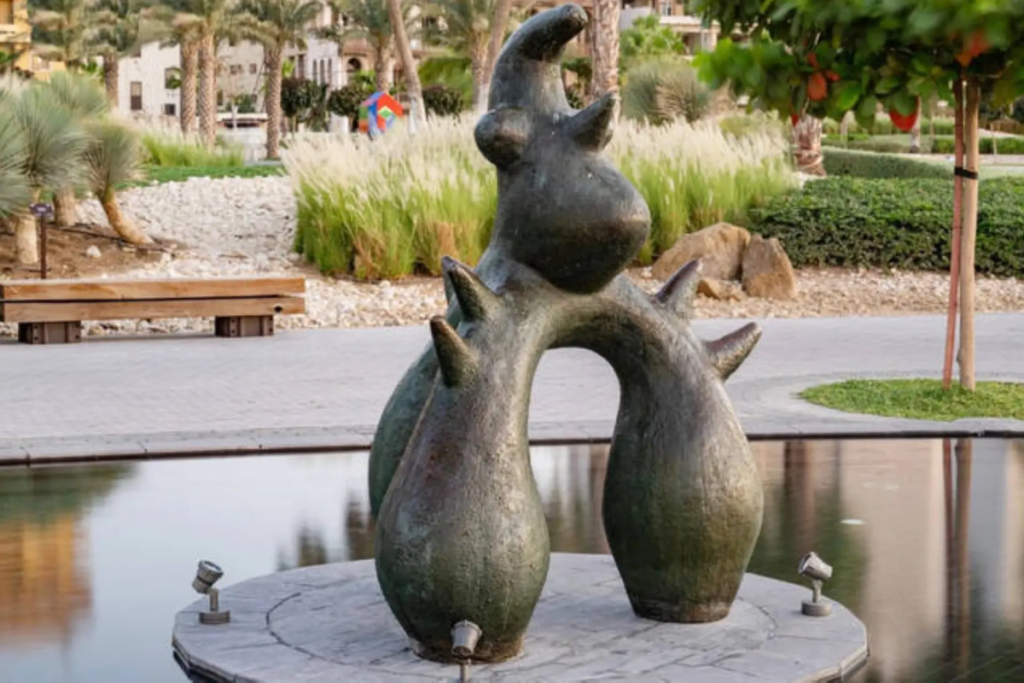
Joan Miró is often introduced through his paintings, but sculpture became increasingly important during his later career. His work is playful without being simple. Shapes can resemble people, animals, machinery or creatures that belong entirely to his imagination. Even when the title sounds formal, the sculpture itself rarely settles into one obvious meaning.
That makes Miró easy to enjoy without knowing much about modern art. There is no correct interpretation that needs to be discovered before the work can be appreciated. One person may see a figure, another an object, and someone else something completely different.
Alexander Calder
Alexander Calder changed modern sculpture by introducing movement. He is best known for mobiles, delicately balanced works that shift with the air. His larger outdoor pieces, often described as stabiles, remain fixed but still appear energetic because of their sweeping lines, bold shapes and carefully calculated balance.
Calder’s work depends heavily on the space around it. The sky fills the gaps between the metal forms, while shadows move across the ground throughout the day. Beside the Red Sea, that relationship becomes even more noticeable.
Victor Vasarely
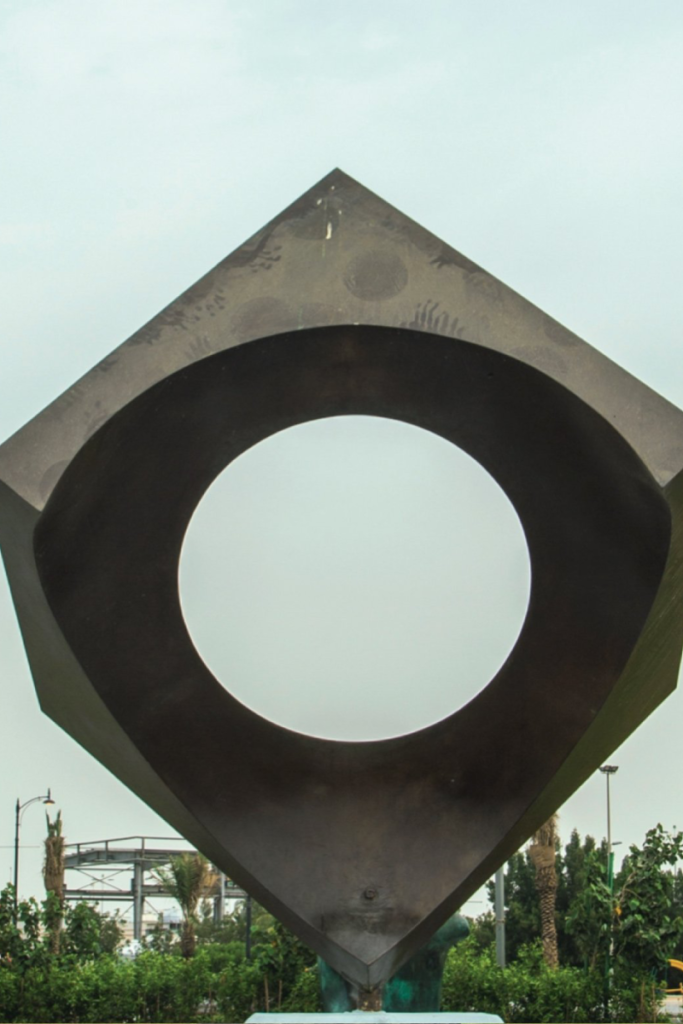
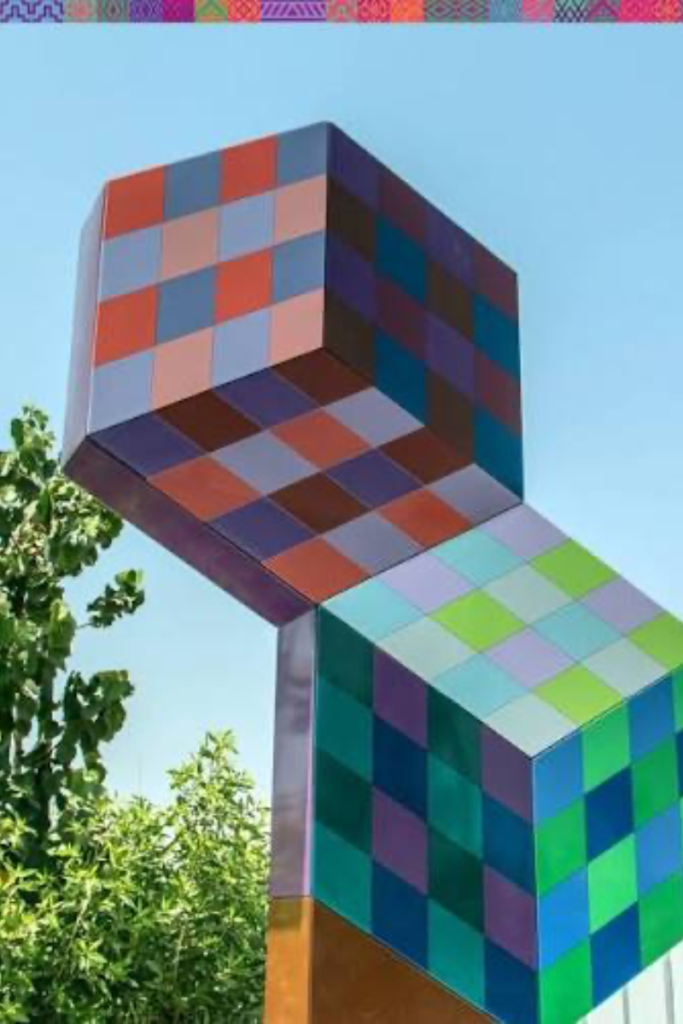
Victor Vasarely was one of the leading figures in Op Art, a movement that used shape, pattern and contrast to create the illusion of movement and depth.
His work often asks the eye to do more than it expects. Flat surfaces can appear to bend, while cubes seem to shift forwards or disappear into the background.
The Illusion of the Second Cube is one of the works now displayed around Al-Arbaeen Lake. It cannot be fully understood from one quick look, particularly as the effect changes depending on where the viewer stands.
Jean Arp
Jean Arp’s sculptures have a softer, more organic quality. Their smooth forms can suggest stones shaped by water, parts of the human body or plants beginning to grow, but they rarely become one recognisable object.
That softness creates a contrast with the sharper geometry found elsewhere in Jeddah’s collection. In a coastal setting, the shapes can feel connected to shells, waves and objects gradually worn smooth by the sea.
Saudi and Arab Artists in Jeddah’s Public Spaces
The famous international names receive much of the attention, but Jeddah’s sculpture story was never limited to Europe and North America. Artists from Saudi Arabia, Egypt, Lebanon, Syria and elsewhere in the Arab world were also part of the collection. Some worked with abstraction, while others drew more visibly on Arabic calligraphy, regional architecture, Islamic pattern and familiar objects from everyday life.
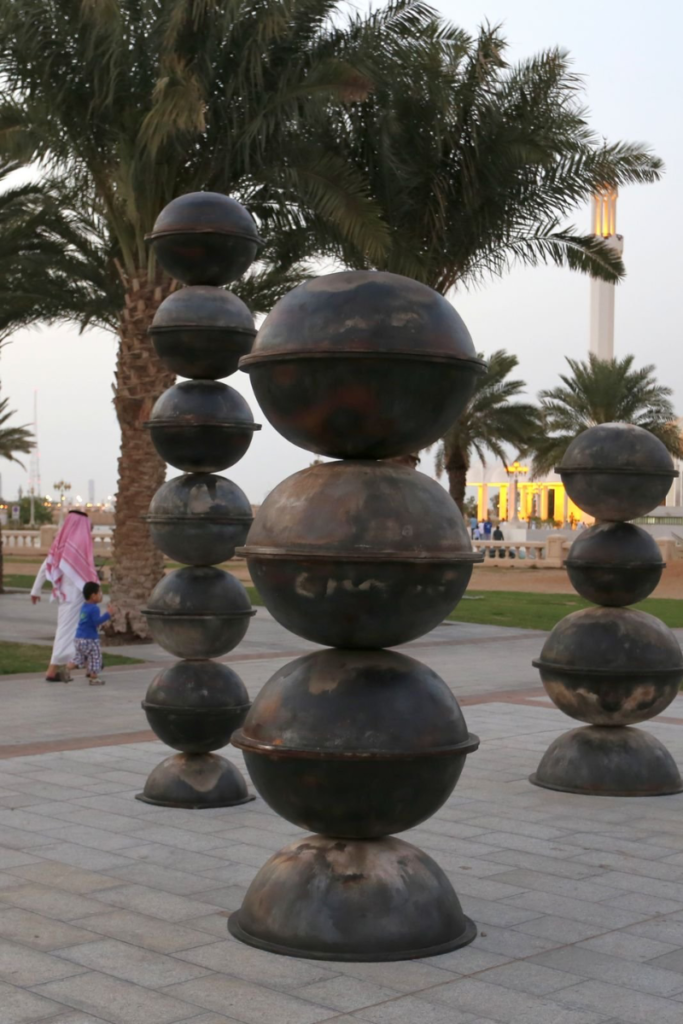
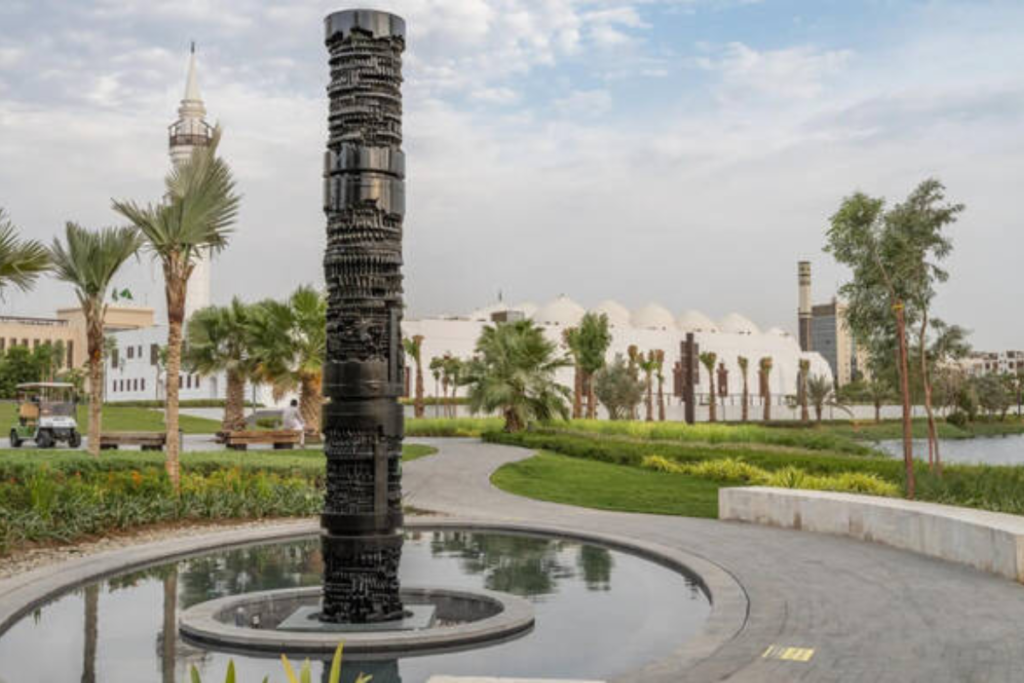
These works gave the collection a local and regional identity rather than allowing it to become a display of imported modernism. One of its most memorable contemporary additions is Food for Thought “Abraj” by Saudi artist Maha Malluh.
The sculpture is created from aluminium cooking pots traditionally used to prepare food for large groups. Stacked into tall forms, they resemble both communal serving vessels and the towers that have transformed Gulf skylines.
The materials carry familiar memories. They suggest weddings, family gatherings, hospitality and meals prepared for far more people than one household table could hold.
When the work was installed on the Corniche in 2016, Malluh became the first Saudi female artist to have a sculpture displayed there. Her contribution brought a contemporary Saudi voice into a collection first developed several decades earlier.
A New Open-Air Gallery at Al-Arbaeen Lake
Jeddah’s sculpture experience is no longer centred only on the Corniche. In 2025, Al-Arbaeen Lake near Historic Jeddah was transformed into another open-air gallery through an initiative led by the Ministry of Culture in cooperation with Jeddah Municipality.
Fourteen international works were placed around the lake, including pieces by Victor Vasarely and Lorenzo Quinn. The setting gives the sculptures a different character.
Historic Jeddah is close by, with its coral-stone buildings, wooden rawasheen and streets shaped by centuries of trade and pilgrimage. Against that background, the modern works create a conversation between different periods of the city.
The lake also encourages visitors to move slowly around the collection. Sculptures appear across the water, disappear behind landscaping and return from another angle.
This newer display explains why information about Jeddah’s open-air museum can sometimes feel confusing. Older guides tend to focus entirely on the Central Corniche, while more recent coverage directs visitors towards Al-Arbaeen Lake.
Both belong to the wider story. Jeddah’s public-art collection is now better understood as something spread across several parts of the city rather than one enclosed museum where every work remains permanently in the same place.
What to Expect When Visiting
There is no need to arrive with a detailed understanding of 20th-century sculpture. Some pieces will make sense immediately. Others may feel strange or difficult to read, and that difference is part of the experience. Walk around the work before deciding what it resembles. A sculpture that appears flat from the front may open up from the side, while a gap in the metal may suddenly frame the water, a historic building or another piece beyond it.
Distance changes the view too. Standing close reveals marks, joints, and changes in the surface. Stepping back shows how the sculpture holds its place within the landscape.
The first practical decision is which part of the collection to explore. The Jeddah Sculpture Museum on the Corniche brings together more than 20 restored works in a coastal setting, while Al-Arbaeen Lake offers the newer display of 14 international sculptures close to Historic Jeddah.
The two locations are not beside one another, so they are better treated as separate outings rather than rushed into the same evening. Al-Arbaeen Lake can be combined with time in Al Balad, although the historic district deserves several hours of its own.
Late afternoon is the easiest time to visit. The heat begins to ease, the light becomes softer, and the walk can continue towards sunset. The sculptures often look more dramatic after dark, although their details are easier to appreciate while some daylight remains.
Comfortable shoes and water are essential, particularly during warmer months. Since the collection sits in public outdoor areas, landscaping, maintenance and individual placements may change. Visitors should also expect a less formal experience than they would find in a traditional museum. Labels may not always be available beside every work, and there is no fixed route to follow.
The experience works well with children because there is no pressure to stay quiet or move through the collection in a particular order. Asking what a sculpture resembles often leads to a better conversation than reading out a long explanation before anyone has looked properly. It is also perfectly fine not to like every piece. Public art becomes interesting partly because nobody has to agree about it.
Why Jeddah’s Open-Air Museum Matters
Jeddah’s sculptures tell more than the history of modern art. They tell the story of a city growing rapidly and making an unusual decision about what that growth should look like. Rather than treating art as something to add later, Jeddah placed it beside roads, along the waterfront and within spaces people already used.
The sculptures survived decades of salt air, traffic, construction and change. Some became famous. Others became so familiar that residents stopped thinking of them as artworks at all. That may be the most interesting part of the collection.
A Henry Moore sculpture can be internationally significant and still be remembered as the shape someone passed on childhood drives. A work by Miró can belong to the history of modernism and to the everyday visual memory of Jeddah at the same time.
The restoration of the Corniche museum protected an important part of that history. The newer installation at Al-Arbaeen Lake has now given the collection another life beside one of the city’s oldest districts.
For residents who have driven past these sculptures for years, visiting them deliberately can feel surprisingly different. The shapes may be familiar, but the story behind them reveals something easy to miss. Jeddah did not simply build an impressive sculpture collection. It allowed the collection to become part of the city itself.
Discover more of Jeddah’s creative side with The Jeddah Atlas, from contemporary galleries and Historic Jeddah to museums, cultural spaces, and public art across the city.