



The best kabsa in Jeddah is usually the one made at home. Most people already know exactly how they like it. The rice may need to be darker, the chicken more roasted, or the daqoos hot enough to require laban after every few mouthfuls. It is a dish people grow up eating, which makes restaurant kabsa surprisingly personal.
Still, there are afternoons when nobody is cooking and the only sensible plan is to order a large tray, place it in the middle of the table, and let everyone find their own corner.
Jeddah has plenty of restaurants serving rice and meat, but a good kabsa needs more than a generous portion. The rice should carry the flavour of the broth and spices without feeling oily, while the chicken or lamb or hashi needs to be tender enough to pull apart without much effort. These are the places residents can keep in mind for family lunches, casual meals with friends, and evenings when only kabsa will do.
Kabsa Restaurant in Jeddah
Al Saddah
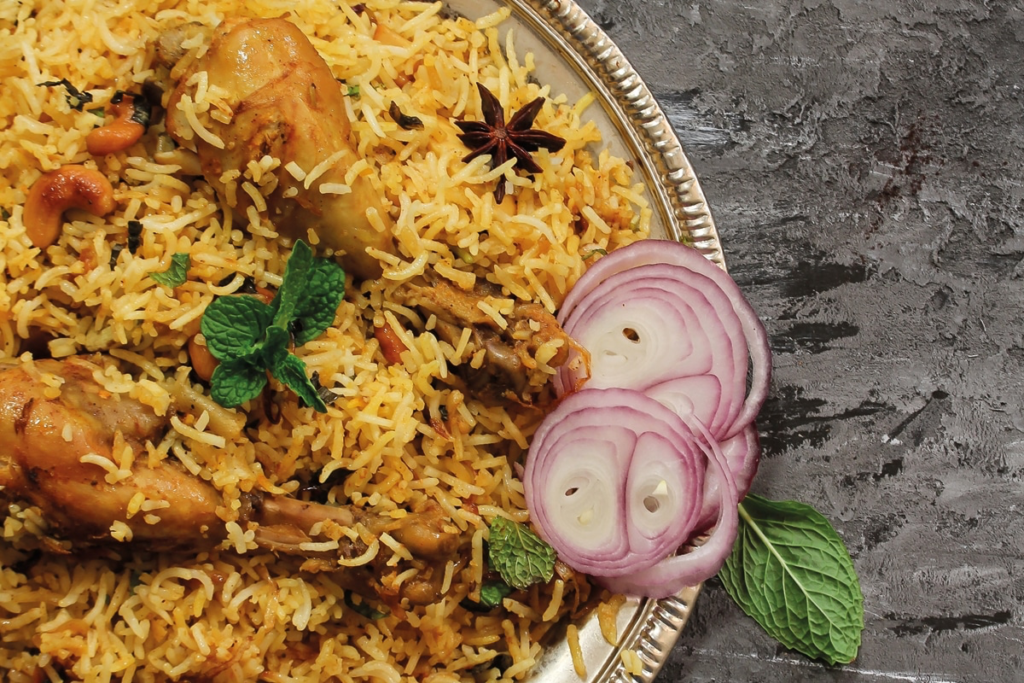
Al Saddah is one of those Jeddah restaurants people tend to suggest without needing much time to think about it. There are several branches around the city, making it an easy option when the group chat has moved from discussing lunch to repeatedly asking who is actually placing the order.
Dining in is straightforward. Choose the food at the counter, then settle at a regular table, in a private family space or on the floor in one of the traditional seating areas available at selected branches. Before long, the table is covered with rice, chicken, salads, yoghurt and far more sauce than anyone originally planned to order.
Kabsa is an obvious place to begin, although the menu also includes mandi, madfoon, and madhbi. This helps when one person wants kabsa, someone else insists on smoky mandi rice, and the rest of the table is happy as long as there is enough chicken.
The green chili sauce is one of the details that brings the plate together. Add a little beside the rice rather than pouring it over everything at once. Caramelised onions add sweetness, while the red daqoos gives the meal the acidity it needs.
Al Saddah works particularly well for a relaxed family lunch. Portions are made for sharing; nobody needs to worry about ordering too little, and the setting allows the meal to take as long as it takes.
Qidr and Jamra (قدر وجمرة)
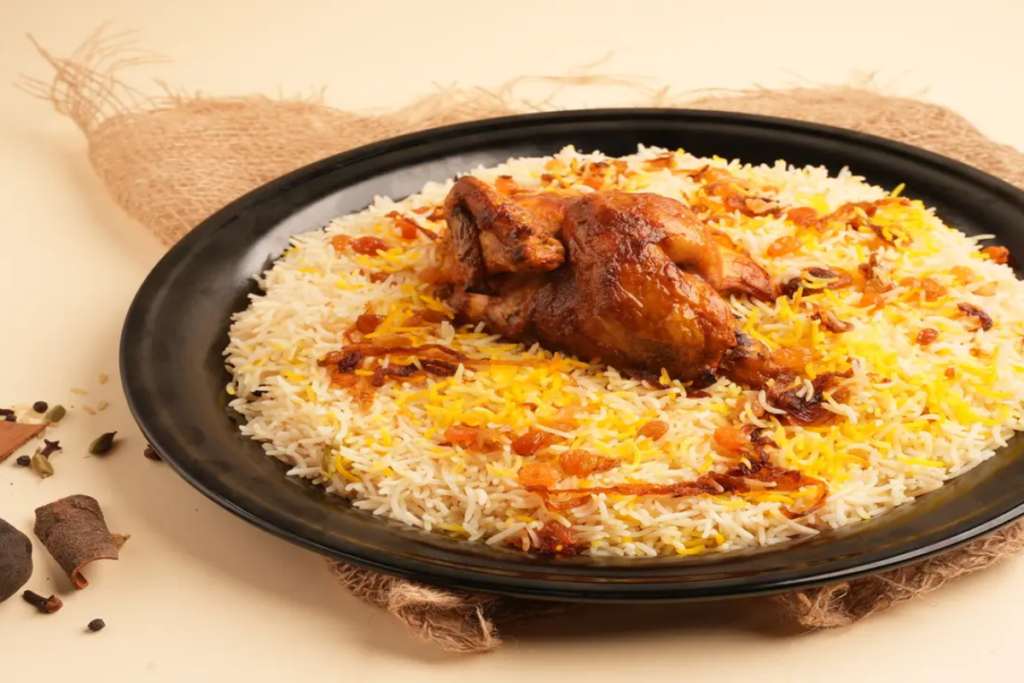
Qidr and Jamra are newer arrivals in Jeddah, but they have already made themselves easy for residents to find, with branches in Al Samer, Al Harazat, and Al Mahamid.
The menu stays close to the food people are actually coming for. There is regular chicken kabsa, hashi kabsa, and Kabsa Al Taybeen, an older-style version available with either chicken or lamb.
The easiest way to order is to place two different kabsa trays in the middle of the table and let everyone compare. Regular chicken kabsa keeps things familiar, while Kabsa Al Taybeen has a deeper, more traditional seasoning that works particularly well with lamb. Hashi is there for anyone who wants something richer.
This is also one of those menus where a simple lunch can become a full table very quickly. Jareesh, qursan, okra, and other hot dishes sit alongside cucumber yoghurt, spicy salad, tahini, and meat samosas. Add grilled or rotisserie chicken, and suddenly the person who said they only wanted a small meal is looking for another plate.
For a family order, the chicken options are the easiest place to begin. When several people are eating, add lamb or hashi for the middle and let everyone try a little rather than committing to one large portion.
Qidr and Jamra works because it can be an ordinary neighbourhood lunch rather than somewhere that needs a special plan. Residents living near one of its Jeddah branches can collect dinner on the way home, order several trays for the family or settle the argument over which style of kabsa is best by putting more than one on the table.
Kabst Elham
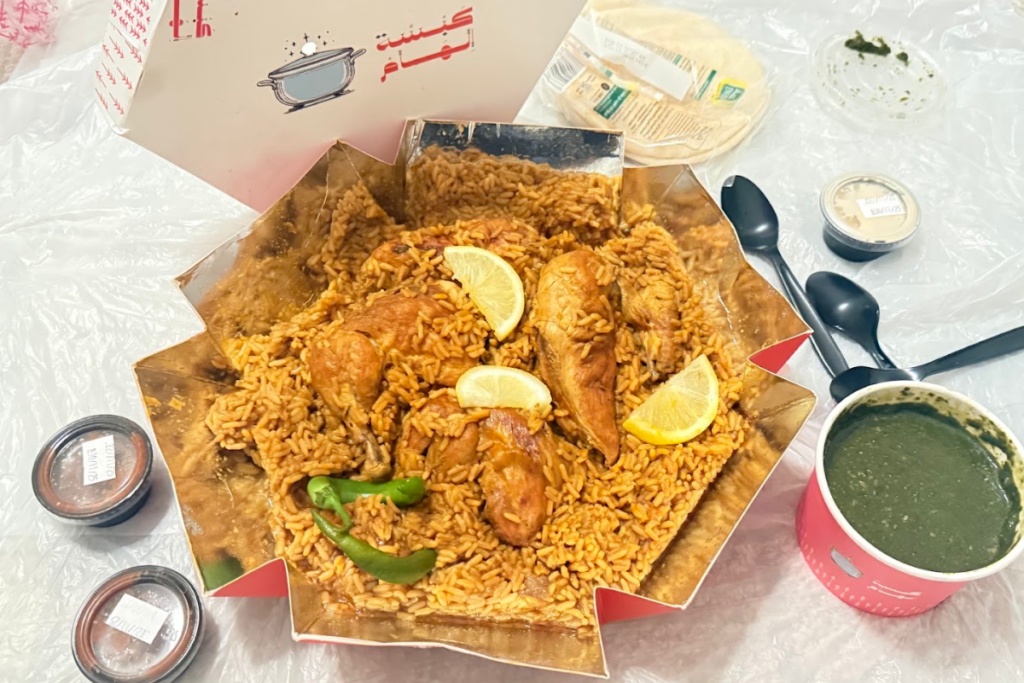
Kabst Elham takes a newer approach. The Jeddah-born restaurant has a tightly focused menu, bold branding and a house kabsa recipe that has built its own following.
There are two main choices. Kabsa Elham uses chicken prepared with the restaurant’s house spice blend, while Kabsa Nathri cooks the chicken with the rice so the flavours come together during the cooking process. Both can be ordered with half or whole chicken and arrive with daqoos.
The half-chicken portion works well for one hungry person. The whole chicken is the better decision when the food is heading back to a family table, particularly once side dishes begin appearing beside it.
Kabst Elham is also one of the easiest options for a night at home. Order the food, clear enough space on the table, and open everything while it is still steaming. The rice is flavourful enough to eat on its own, but the meal improves once the daqoos starts moving around the table and everyone begins adding their preferred extras.
There is also something very Jeddah about how easily the restaurant fits into everyday plans. It can be lunch after a long morning, dinner when friends arrive unexpectedly, or a whole-chicken order delivered because nobody is willing to leave the house.
For residents who have eaten the same familiar kabsa for years and want a version with a more noticeable house style, Kabst Elham offers something different without taking the dish too far from what people already love about it.
Hashi Basha
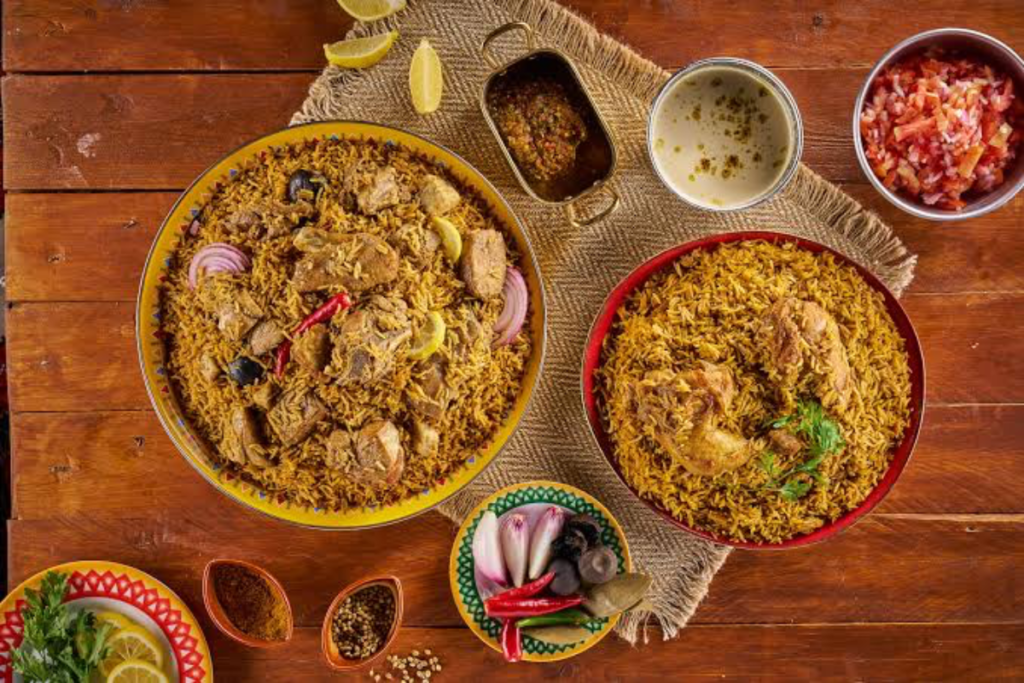
Hashi Basha is the one to choose when chicken kabsa feels too predictable. The menu includes chicken, lamb, and hashi, giving the table the chance to order several versions and see which plate disappears first. Hashi is camel meat, and although people trying it for the first time sometimes expect a very strong flavour, it is often much milder than imagined.
The important part is the texture. When it has been cooked properly, the meat should be tender enough to separate easily and rich enough to stand up to the spiced rice underneath.
A mixed order works best here. Start with chicken kabsa for anyone who wants something familiar, then add hashi or lamb for the middle of the table. The restaurant also serves spicy versions, madghout, vegetable dishes, and salads, so the meal can grow quickly once everyone starts adding something.
This is not usually a quiet lunch for two. Hashi Basha makes more sense when several people are hungry and nobody minds sharing. Containers are opened, pieces of meat are moved between plates, and the person who insisted they were not sure about camel meat ends up reaching for another piece. For residents who always order chicken out of habit, the hashi kabsa is the reason to change the routine.
Al Romansiah
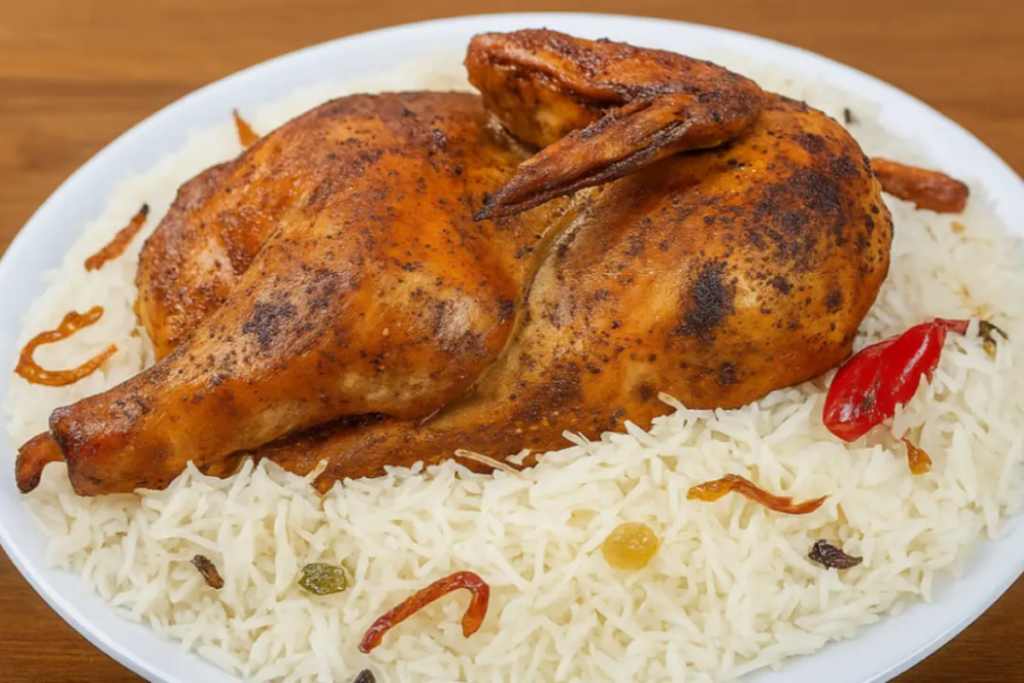
Al Romansiah does not need to be presented as a hidden find. Residents already know what it is for. This is the restaurant to call when lunch needs to feed an entire family, several extra relatives have appeared, or nobody wants to risk ordering portions that turn out to be too small.
The menu is extensive, but chicken kabsa remains one of the simplest orders. It arrives with seasoned Saudi rice and enough food to turn an ordinary afternoon into the kind of lunch that leaves everyone sitting around the table long after they have finished eating.
For larger groups, the shared meals are particularly useful. Portions designed for several people remove most of the calculation, although ordering an extra tray of rice is rarely a decision anyone regrets.
Al Romansiah is also good when the table wants more than kabsa. Madfoon, mandi, madhbi, jareesh, and vegetable dishes can all be added, creating a spread where people move between plates rather than eating one individual meal.
There is a familiar rhythm to it. The rice arrives first, lids come off, yoghurt and salads are pushed into the middle, and somebody immediately begins dividing the chicken before everyone has sat down.
It may be a national chain, but that does not make it any less useful to Jeddah residents. Its branches, large portions, and reliable family orders are precisely why people continue returning to it.
Do Not Forget the Sides
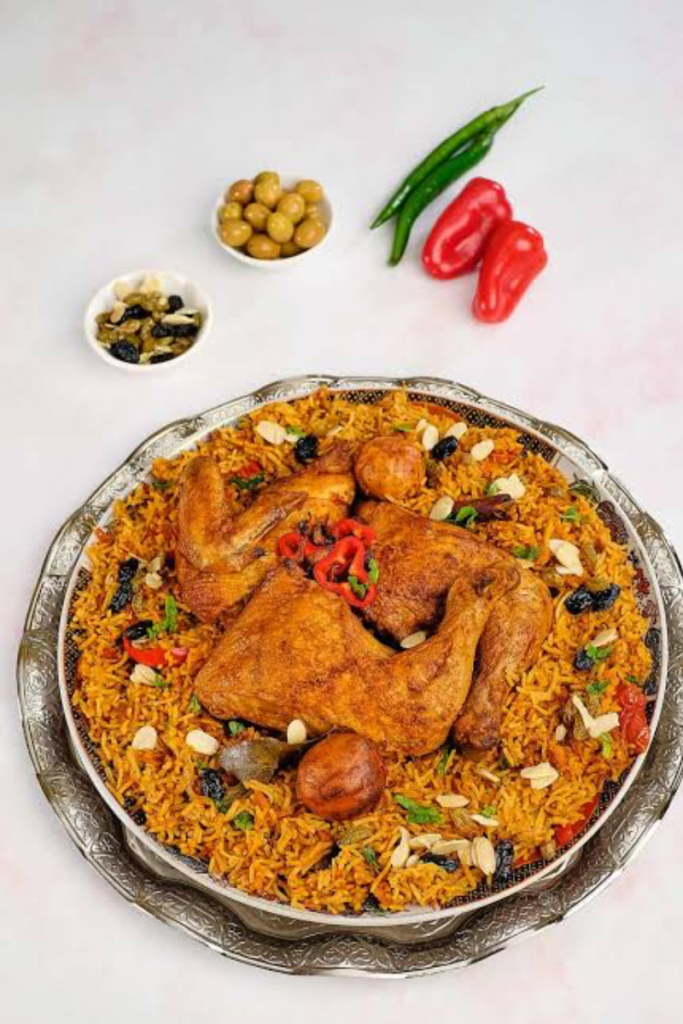
Kabsa can stand on its own, but the sides change the meal. Daqoos brings tomato and acidity to the rice, while a hotter green sauce wakes up a plate that may otherwise feel too rich. Yoghurt cools everything down, and caramelised onions add sweetness and texture.
There is no correct combination. Some people mix yoghurt through the rice. Others keep every sauce carefully separated and build each mouthful differently. Someone at the table will always claim they do not want salad and then eat half of it.
Order according to the restaurant, too. Al Saddah’s green sauce deserves space beside the rice, while Kabst Elham’s daqoos is part of the main order rather than an afterthought. Hashi kabsa benefits from something fresh and sharp alongside it, particularly if several meat dishes are being shared.
Where Should You Go First?
Al Saddah is the easiest all-round choice for a family lunch, particularly when the table wants a mixture of kabsa, mandi, and madfoon. Qidr and Jamra is the one to try when the table wants several styles of kabsa, particularly its old-style Kabsa Al Taybeen.
Kabst Elham offers a newer house style that works especially well for takeaway, while Hashi Basha is the obvious choice when it is finally time to try camel meat. Al Romansiah remains the practical answer when a lot of people need feeding and nobody wants to complicate the order.
The best choice depends on the day, the people around the table, and whether anyone at home has already offered to cook. When they have not, Jeddah has plenty of very good backup plans.
Explore The Jeddah Atlas for expert guides to the city’s best Saudi restaurants, traditional dishes, cafés, hidden food gems, and must-try dining experiences.