



Al Balad Jeddah is not somewhere you finish in one visit. You can arrive with a route planned and still end up following a narrow lane because the rawasheen look particularly beautiful from that angle. Someone will stop for sobia they had not intended to buy, a restored house will take longer than expected and the café break will quietly become the main part of the afternoon.
That is how Al Balad works. Historic Jeddah was once the commercial heart of the city, an important Red Sea port, and the arrival point for pilgrims travelling by sea towards Makkah. Its coral-stone buildings, merchant houses, mosques, and souqs reflect centuries of trade and the people who reached Jeddah from across Africa, Asia, and the Middle East.
UNESCO added Historic Jeddah to its World Heritage List in 2014, but Al Balad is not a heritage district preserved behind glass. People still work, shop, eat, pray and run errands here.
Restoration is continuing, old buildings are finding new uses, and cultural spaces are opening inside homes that once belonged to Jeddah’s merchant families. For people who live in the city, the best way to experience Al Balad is to stop treating every visit as though it needs to include everything.
When Is the Best Time to Visit Al Balad?
Late afternoon is usually the easiest time to arrive. The heat begins to soften, shops become busier, and the streets gradually fill with people heading out for dinner, shopping, or an evening walk. Arriving before sunset also gives you time to see the buildings in daylight before lanterns, signs, and shopfronts change the atmosphere after dark.
During Jeddah’s cooler months, it is possible to spend several hours walking without thinking too carefully about the temperature. Summer needs a little more planning. Start later, keep the pace slow, and include at least one indoor stop.
Morning visits feel completely different. The streets are quieter, breakfast restaurants are busy, and there is more room to look properly at the buildings without moving through the evening crowds. It is a good time for photography, heritage houses, and breakfast before the day becomes too hot.
Ramadan, Eid and national celebrations bring decorations, cultural programmes and evening events into the district. The atmosphere can be brilliant, but the area also becomes considerably busier. Check the current Historic Jeddah calendar before leaving home if a particular event is part of the plan.
How Should You Get to Al Balad?

Driving into the heart of the district is rarely the most enjoyable part of the visit. Parking becomes difficult during weekends and events, while many of the streets are either pedestrianised or far easier to explore on foot. It is often simpler to park near one of the main access points or arrive by taxi, then begin walking once you reach the edge of the historic area.
Golf carts may operate through selected parts of the district, which can be useful for older relatives or anyone who cannot comfortably cover long distances. Walking still offers the best experience, though. Many of Al Balad’s most interesting details sit between the main landmarks rather than directly beside them.
Wear comfortable shoes. This sounds obvious until the group has been walking for two hours and somebody admits they chose that morning to break in a new pair. The ground is uneven in places, and every interesting lane adds another few minutes to the route.
Begin at Bab Makkah

Bab Makkah is a natural place to start because it immediately connects the district to its past. The gate once marked the eastern entrance to the walled city and the road used by pilgrims and traders travelling towards Makkah. The surrounding market remains one of Al Balad’s busiest areas, with shops selling fabric, household goods, spices, perfume and food.
Do not photograph the gate and leave immediately. Walk through the streets around it and give yourself time to settle into the pace of the market. Deliveries arrive, shopkeepers call out to customers and several conversations appear to be happening at once.
It may feel slightly chaotic on a busy evening, but that is part of what makes the area different from Jeddah’s newer shopping districts. This is not a carefully managed retail experience. It is a working market that has grown around the needs of the city for generations.
Walk Through Souq Al Alawi

Souq Al Alawi runs through the historic district and remains one of the best places to see how Al Balad still functions as a commercial neighbourhood.
Shops sell textiles, abayas, prayer beads, oud, incense, spices, traditional clothing and everyday household items. The souq historically formed part of the route connecting the port with Bab Makkah, carrying goods and people across the city.
Even when nobody plans to shop, it is worth walking through slowly. The displays at street level draw most of the attention, but remember to look above them. Wooden rawasheen stretch across the façades, old doors sit between newer shopfronts and sections of coral stone remain visible beneath years of repair.
That mixture is what keeps the district feeling alive. One visit may involve choosing perfume or fabric. Another might consist almost entirely of walking, people-watching and deciding which food stall smells best. There is no need for every visit to have a serious cultural purpose. Sometimes browsing is enough.
Look Up at the Rawasheen

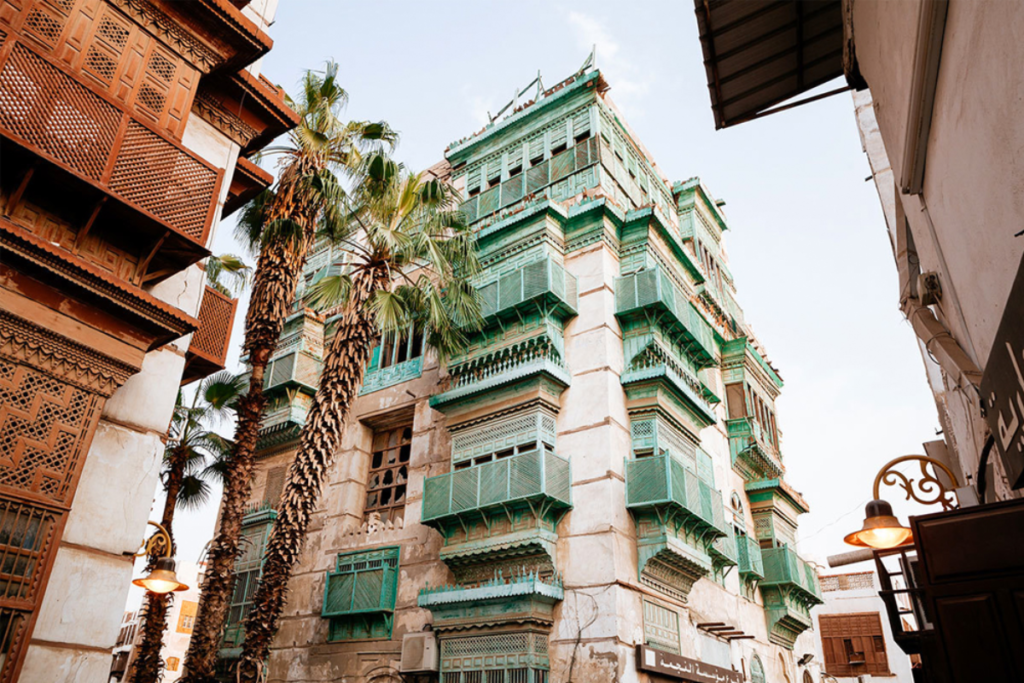
Al Balad rewards anyone who remembers to look above street level. The wooden rawasheen are among its most recognisable features. They provided shade and privacy while allowing air to move through the houses, helping families manage Jeddah’s heat and humidity long before air conditioning arrived.
The wealthier merchant homes became particularly elaborate during the late nineteenth century. Local coral-stone construction was combined with craftsmanship, timber and design influences carried through Red Sea and Indian Ocean trade routes.
No two buildings look quite the same. Some rawasheen are dark and heavily carved. Others are painted blue or green, with narrow openings that catch the light differently throughout the day. Several façades have been carefully restored, while others still show the wear of time and the scale of the work taking place across Historic Jeddah.
The most memorable view is not always attached to a famous building. It may appear unexpectedly above a grocery shop, at the end of an alley or between two houses that were not on the route at all.
Visit Beit Nassif

Beit Nassif is one of the buildings most closely associated with Al Balad. The house was built during the late nineteenth century for the Nassif merchant family and later became connected to King Abdulaziz, who stayed there after entering Jeddah in 1925.
Its broad staircases, high rooms and wooden detailing give a clearer picture of how one of the city’s prominent families once lived. The staircases were also wide enough for camels to carry supplies to the upper levels of the house.
The neem tree outside is part of the story too. Trees were once unusual inside the tightly built district, and it became such a recognisable landmark that Beit Nassif was also known as the House of the Tree.
Opening arrangements can change around restoration work, exhibitions and cultural programmes, so check before planning the entire day around going inside.
Even when interior access is limited, the exterior deserves more than a quick photograph. Stand far enough back to see the full height of the house and the rows of wooden windows rising above the street.
Step Inside Beit Al Matbouli

Beit Al Matbouli offers a more intimate look at domestic life in old Jeddah. The Hijazi house has been turned into a heritage museum, with rooms containing furniture, household objects and details connected to the families who lived in the district.
It feels different from visiting one of the grand merchant houses. Rather than focusing only on architecture, the rooms make it easier to imagine daily life taking place inside them.
Meals were prepared, guests arrived, children moved between floors and families watched the streets from behind the rawasheen. Access and opening hours can change, as they can with many of Al Balad’s historic properties. Check before visiting, but do not let one closed house ruin the day. There will always be another building, lane or courtyard nearby.
Stop at Al Shafi’i Mosque

Al Shafi’i Mosque is believed to be one of the oldest mosques in Historic Jeddah. Its traditional form and central position connect it closely to the neighbourhood that developed around it. The mosque has been restored, but it remains an active place of worship rather than a museum.
Visitors should dress respectfully, avoid entering during busy prayer times simply to look around and give worshippers the privacy they need.
The mosque is also beautiful from the surrounding streets, where its minaret appears between buildings and signs. Hearing the call to prayer move across Al Balad from several nearby mosques is one of those moments that shifts the entire atmosphere of the district. There is no need to turn the mosque into a lengthy sightseeing stop. Pause, look properly and allow it to remain what it is.
Eat Breakfast at Foul Fattah

A morning in Al Balad should probably begin with breakfast. Foul Fattah has been serving traditional dishes in Historic Jeddah for decades and is known for foul, tamees, masoub and the kind of breakfast that needs several plates in the middle of the table.
There is no need to overcomplicate the order. Choose more than one type of foul, tear pieces from the warm bread and let everyone decide which version they prefer. Masoub adds something sweet and filling, while Adeni tea makes far more sense once it is sitting beside the food.
The street will already be moving around you. Deliveries arrive, nearby shops open and regular customers who know exactly what they want will somehow finish ordering before your table has agreed on anything. That is part of the morning.
Stay for a Traditional Lunch

Al Balad’s food deserves more than one quick snack. Baeissa is known for mandi rice and traditional meat dishes, while Baeshen Seafood serves grilled fish, shrimp and other seafood connected to Jeddah’s Red Sea identity.
A traditional lunch works best when there are enough people to share. Order rice, meat, or fish for the middle, add salad and sauces, then accept that the meal will probably take longer than planned. This is especially useful during the hotter part of the day, when nobody needs to rush back outside.
Naji Al Harbi is another familiar local name, known for kebabs and charcoal-grilled meat. It is the kind of restaurant people recommend because their families have been eating there for years, not because it appeared online last month. The best Al Balad food plans are rarely complicated. Order what the restaurant does well, share it and leave room for something sweet later.
Drink Sobia and Follow the Street Food

Sobia is closely associated with Jeddah, particularly during Ramadan, but it can be found around Al Balad at other times too. The chilled drink is traditionally made using bread or barley, sugar, and spices. Every seller has a slightly different version. Some are pale and gently spiced, while others are darker, sweeter, and strong enough to divide the group immediately.
Buy a small cup before committing to a large bottle. Al Balad is also a good place to look for balila, mutabbaq, liver sandwiches, fried snacks and sweets. What is available changes depending on the time of day and season, so it is better to see what is being prepared than arrive determined to find one exact stall.
Fresh food usually announces itself before you see it. Follow the smell, notice what people are ordering and keep tissues nearby. Street food has very little interest in remaining neatly inside its container.
Have Coffee Inside a Heritage Building

Coffee in Al Balad feels different when the café sits inside a restored house. Several heritage buildings now contain cafés, cultural spaces and creative businesses, allowing people to spend time inside the architecture rather than only looking at it from the street.
1/15 Neighborhood Café is one option within the historic district, while Minaa Café and Irth Culinary Boutique & Café have also become part of Al Balad’s current food and cultural scene.
These stops are helpful for practical reasons too. After an hour or two of walking, everyone becomes much more interested in air conditioning, seating and a cold drink than they were at the beginning of the day. Choose somewhere that makes you want to stay for a while. The streets will still be there when the coffee is finished.
Shop Without Rushing

Shopping in Al Balad works best when there is no rigid list. Souq Al Alawi and the streets around Bab Makkah contain shops selling perfume, oud, incense, prayer beads, textiles, traditional clothing, spices, gold, household goods and gifts.
Some businesses have traded in the district for generations. Others serve the ordinary daily needs of people who continue to live and work nearby.
Take time to compare prices and quality, especially when buying perfume, incense, or fabric. Polite bargaining may be part of the experience in smaller shops, but not every price is the opening move in a dramatic negotiation. Read the room and remain respectful.
The best purchase is often the one nobody planned to make: an oud blend that smells different once it settles, a fabric colour spotted from across the street or a kitchen item someone remembers from childhood. Al Balad makes browsing feel like part of the day rather than a task to finish.
Consider a Guided Walking Tour
People who live in Jeddah sometimes assume guided tours are only for visitors. Al Balad is one place where that does not really apply. A good guide can explain why houses were built in particular ways, how the different quarters developed, and what details are easy to miss when walking alone.
The history becomes much easier to understand once the souqs, pilgrimage routes, merchant houses, and old city gates are connected properly.
A tour also changes every visit that follows. Once someone has explained the rawasheen or the relationship between the port and Bab Makkah, those details remain visible whenever you return. Take the tour once. Then come back alone and notice how much more of the district makes sense.

Make Room for the Unexpected
The quickest way to make Al Balad feel like work is to create a list of fifteen places and insist on reaching every one of them. Restoration may close a route. A heritage house may not be open that day. An event may fill a square that was quiet the week before. Someone in the group may decide they need forty minutes to choose incense.
Let the plan move. The district is compact enough to explore on foot but layered enough to reward getting slightly lost. A quiet lane can open into a crowded market. A planned coffee stop can become the place everyone stays until sunset. That is not poor organisation. It is a normal afternoon in Al Balad.
A Simple Half-Day Route Through Al Balad
For a first proper visit, begin around Bab Makkah and walk through the surrounding market before continuing into Souq Al Alawi. From there, move towards Al Shafi’i Mosque and Beit Nassif. Take time to look at the rawasheen and smaller streets rather than following the fastest route.
Stop at Beit Al Matbouli if it is open, then take a break for coffee or an early dinner inside the district. Finish with another walk after dark. The buildings look different once the lights come on, food stalls become busier, and the evening crowds begin moving through the souqs. What felt like a heritage district during daylight starts to feel like part of the living city again.
For a morning visit, begin with breakfast at Foul Fattah, explore while the streets are quieter, and leave before the afternoon heat makes every decision feel less intelligent.
What Should You Know Before Visiting Al Balad?
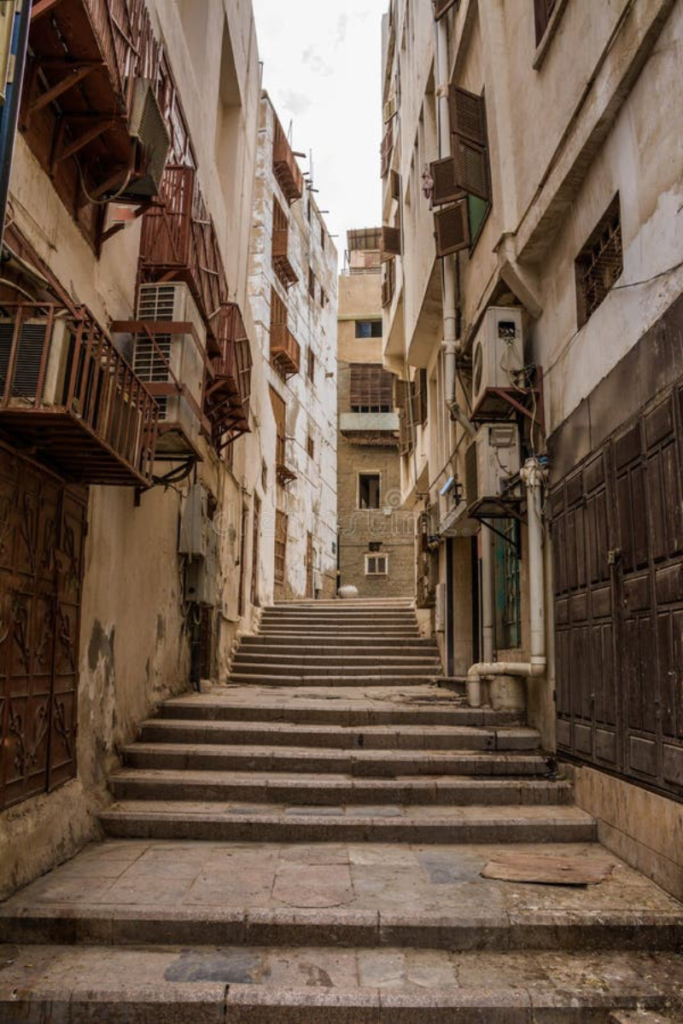
Check current access before travelling if a particular house, museum, or café is essential to the day. Al Balad remains an active district undergoing restoration, so openings and routes can change.
Dress comfortably and respectfully. Bring water, especially outside the cooler months, and expect to walk further than the map initially suggests.
Ask before photographing people or the interiors of smaller shops. Remember that the mosques are active places of worship, and allow for prayer times when planning the visit.
Most importantly, do not judge Al Balad by one hurried afternoon. One visit may be about the architecture. Another might revolve around breakfast, shopping, an exhibition or showing children the streets their grandparents remember differently. Living in Jeddah means there is no need to finish it. You can simply come back.
Ready to explore more of Jeddah? Discover more neighbourhood guides, local restaurants, hidden gems and cultural attractions on The Jeddah Atlas.